The
Model
Model
A Third Sector
Open Learning
Shared Project

Menu

Can AI find evidence with a long amount of text?

Expected answer: AI Governance It is tricky because the model has to distinguish AI Governance from two very plausible distractors in the same text: AI Ethics and AI Alignment.

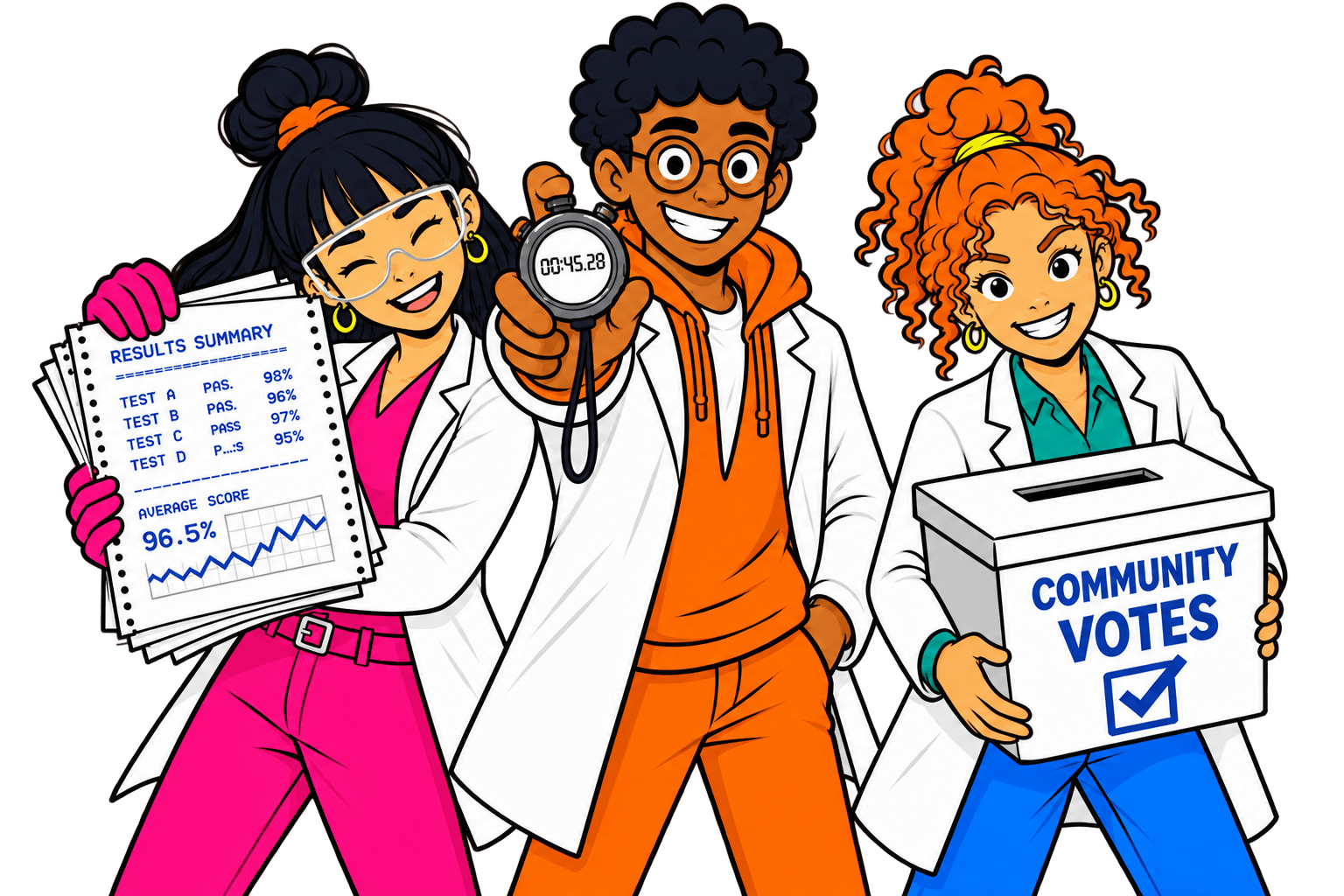
Results of running an experiment

The prompt

Read the entire text below carefully.

Somewhere in the text is a single, small but important detail:

Which term refers specifically to the policies and frameworks used to regulate AI development, deployment, and ethical considerations — rather than the moral principles guiding responsible use or ensuring systems align with human values?

Do not infer or guess. If the text does not contain enough evidence to answer confidently, return NOT FOUND.

--- TEXT BEGINS ---

High-Level AI Concepts

  • Artificial Intelligence (AI) - The replication of human intelligence in machines so that it could perform tasks that normally would require human intelligence, such as learning, reasoning, and decision-making.
  • Machine Learning (ML) - A subset of AI that enables systems to learn from data and improve performance over time without explicit programming.
  • Deep Learning (DL) - A subset of ML that uses neural networks with multiple layers to process large volumes of data.
  • Neural Networks: Computational models inspired by the human brain, which consist of layers of interconnected nodes like neurons.
  • Natural Language Processing: This is a subfield of AI that deals with interaction between computers and human language.
  • Computer Vision: The capability of AI systems to interpret and process visual information from images or videos.
  • Generative AI: The AI that generates new content, such as text, images, music, or code, informed by patterns it learns from existing data.
  • Foundation Model: A large-scale, general-purpose AI model trained on enormous datasets and API adaptable to many different tasks.
  • Self-Supervised Learning: This type of machine learning approach involves the generation of labels by a model from raw data without human annotation.
  • Reinforcement Learning - A technique in AI training wherein agents learn optimal actions through rewards or penalties from their decisions.

Model Types and Techniques

  • Transformer Model - Deep learning architecture, like GPT, good at handling sequential data using attention mechanisms.
  • Large Language Model - A huge AI model trained on vast text data to generate human-like language; for example, ChatGPT and Claude.
  • Multimodal AI refers to AI models that process and generate content across a multitude of data types, including but not limited to text, images, and audio.
  • Zero-shot learning: the ability of an AI system to perform tasks it explicitly never had training for.
  • Few-shot learning: the ability of an AI model to generalize from just a few examples.
  • Fine-tuning: when a previously trained AI model is adjusted for a particular task with extra data.
  • Prompt Engineering: The process of designing input sequences to elicit specific outputs or responses from generative AI models.
  • Semantic Search: AI-powered search that really comprehends meaning, not keyword matching.
  • Embedding: A numeric representation of text, images, or any type of data that AI models use for processing and comparing.
  • Latent Space: Within the AI model, there’s a high-dimensional compacted representation of data in which meaningful relationships are learned.

AI Applications and Use Cases

  • Chatbot – A virtual assistant powered by AI that responds to text or voice inputs in real-time.
  • AIGC: Text, images, videos, or code created by generative AI models.
  • Digital Twin: Virtual replicas of a physical system or process used for simulation, monitoring, or optimisation.
  • Synthetic Data: Artificially generated data used to train AI models when real-world data is scarce or sensitive.
  • Automated Machine Learning (AutoML) – Tools that automate the process of training and optimising ML models.
  • Explainable AI (XAI) – Techniques that make AI decisions more interpretable and transparent to humans.
  • Conversational AI – AI models designed to engage in natural, human-like dialogues with users.
  • AI Ethics – The study of moral principles and guidelines governing the responsible development and use of AI.
  • Bias in AI – Systematic errors in AI models caused by imbalanced training data or flawed design.
  • AI Alignment – Ensuring that AI systems operate in ways aligned with human goals, values, and safety.

AI Hardware and Infrastructure

  • Graphics Processing Unit (GPU) – High-performance processors optimised for parallel computation, essential for training deep learning models.
  • Tensor Processing Unit (TPU) – Google’s custom AI chips designed to accelerate deep learning workloads.
  • Edge AI: AI models deployed directly on devices, such as smartphones or IoT sensors, without relying on cloud computing.
  • Federated Learning: A decentralised approach to training AI models in which the data stays on the user’s device and is not shared centrally.
  • Quantum AI: A combination of quantum computing and AI that tries to solve complex problems that are beyond the capability of classical computers.
  • Compression of AI Models: Techniques of pruning and quantisation which help reduce model size and computation without losing performance.
  • Cloud AI: AI services offered via the cloud, including AWS, Google Cloud, and Azure.
  • LLM Distillation: A process in which smaller models are trained to emulate large AI models at lower costs and efficiency.
  • AI Orchestration: Orchestration of several AI models and workflows to ensure maximum efficiency and scalability.
  • Vector Databases: Specialised databases optimised to store and search AI embeddings, such as Pinecone and FAISS.

Emerging Trends and Risks

  • AI Singularity: The hypothetical point at which AI surpasses human intelligence, marking unstoppable technological shifts.
  • Autonomous AI Agents: AI systems that can perform substantial tasks with limited human intervention.
  • AI-Augmented Creativity: Using AI tools to extend human capabilities to create art, write, and design.
  • Active AI: AI keeps learning and improving automatically by using the interactions between users.
  • Adversarial AI: Methods to try and deceive an AI model by using certain misleading input.
  • AI Watermarking: Techniques that help in the tracing of generated AI to avoid misinformation or misusing intellectual property.
  • Hallucination: A model that makes up completely wrong information but with high confidence.
  • Prompt Injection: A security vulnerability that involves manipulative attacks to lead models to generate responses not intended.
  • AI Governance: Policies and frameworks to regulate AI development, deployment, and ethical considerations.
  • AI Carbon Footprint: Environmental impact by training and running—especially large-scale—AI models.

--- TEXT ENDS ---

Compare the answers